Bull vs Bear
An explanation of the difference between a Bull and Bear run.
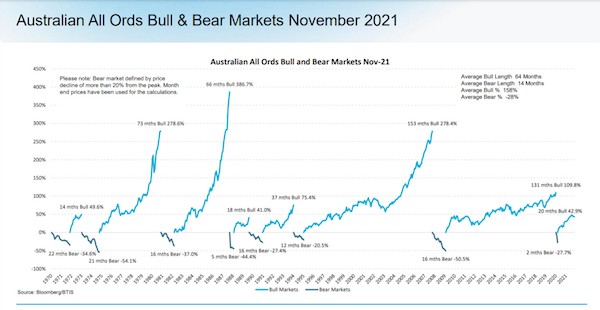
The terms ‘Bull’ market and ‘Bear’ market are always in the news and most know what they
mean, though a brief definition is noted below. The point of this chart is to allow us to see
more detail on Bull and Bear periods in regard to the Australian All Ords since 1970. A
quick snapshot, but interesting.
What is a bull market?
A market is referred to as a ‘bull’ market when the share market is showing confidence. It is
essentially a market in which share prices continue to rise, encouraging buying. After a
sustained period of increasing share prices, investors gain faith that the uptrend will continue
in the long-term. In a typical bull-market, the country’s economy is strong and
unemployment is low.
A market may be called a bull market after a number of ‘bullish’ days in succession, but the
technical criteria for a bull market is a rise in the value of the market by 20%.
What is a bear market?
‘Bear’ markets are the opposite of bull markets, and while there’s no hard and fast rule, the
generally-accepted definition is that they occur when the markets fall by more than 20%. In
bear markets, the prices of securities are falling, and widespread pessimism among investors
caused by the falling prices leads to self-sustaining negative sentiment.
More Articles


SMSF assets reach record levels amid share market rally
How SMSF trustees are investing their retirement savings. . Over 1.1 million Australians are now...

Income-free areas set to increase from 1 July
People nearing retirement often want to know how much they can earn before it affects their pension, and now...

Many Australians have a fear of running out
Longevity risk is a growing concern for many working Australians as well as retirees. . The fear of...

LRBA interest rates increase for 2025
The safe harbour interest rate for related party limited recourse borrowing has changed for...

How to get into the retirement comfort zone
A third of Australians retire without a plan. Here's why you should have one. . Working and generating a...

Compliance focus impacts wind-ups
The ATO’s strategic increased focus on compliance is having a noticeable effect on the sector and is now the...

NALE bill passed by parliament
The bill that will introduce changes to the non-arm’s-length expenditure (NALE) provisions has passed...
Sofie Korac is an Authorised Representative (No. 400164) of Prudentia Financial Planning Pty Ltd, AFSL 544118 and a member of the Association of Financial Advisers.
Financial Advice Sydney and the North Shore Office based in Gordon NSW